

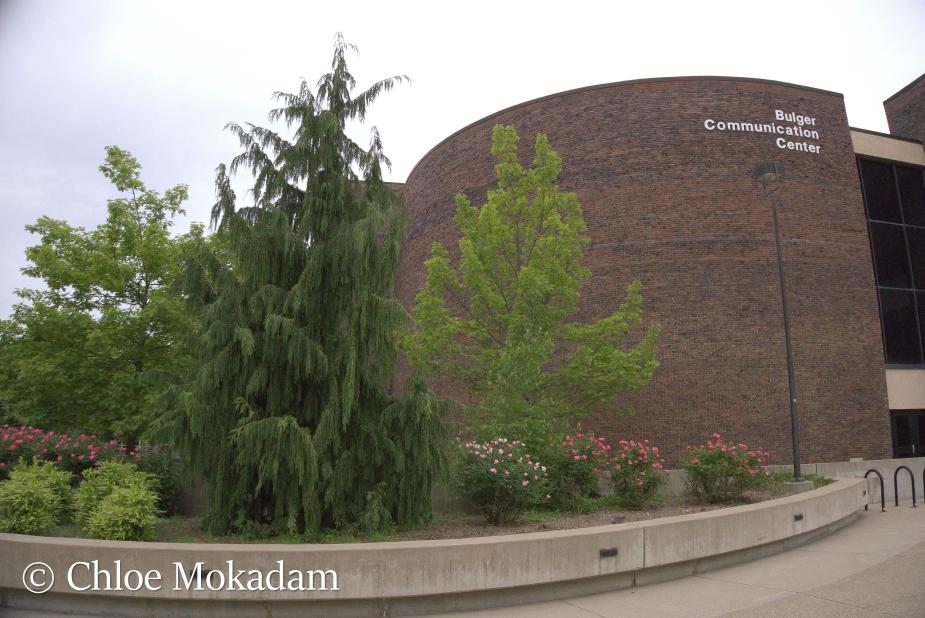
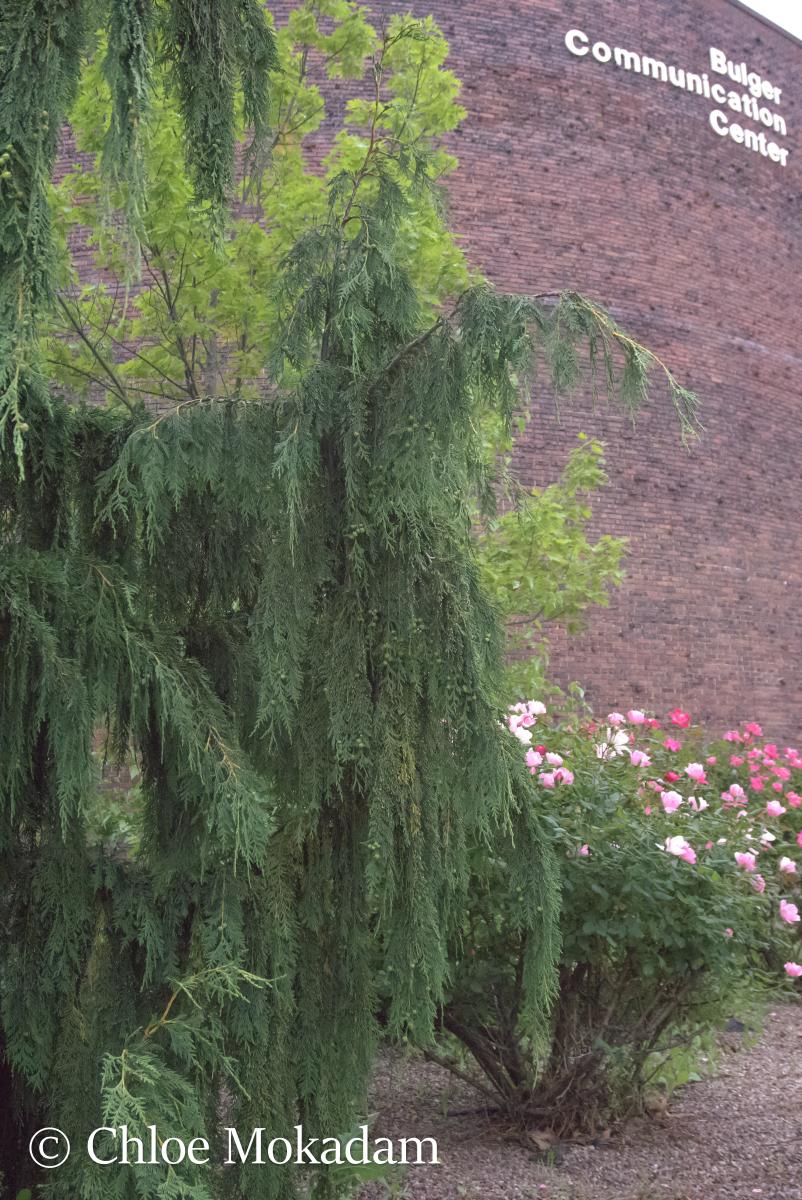
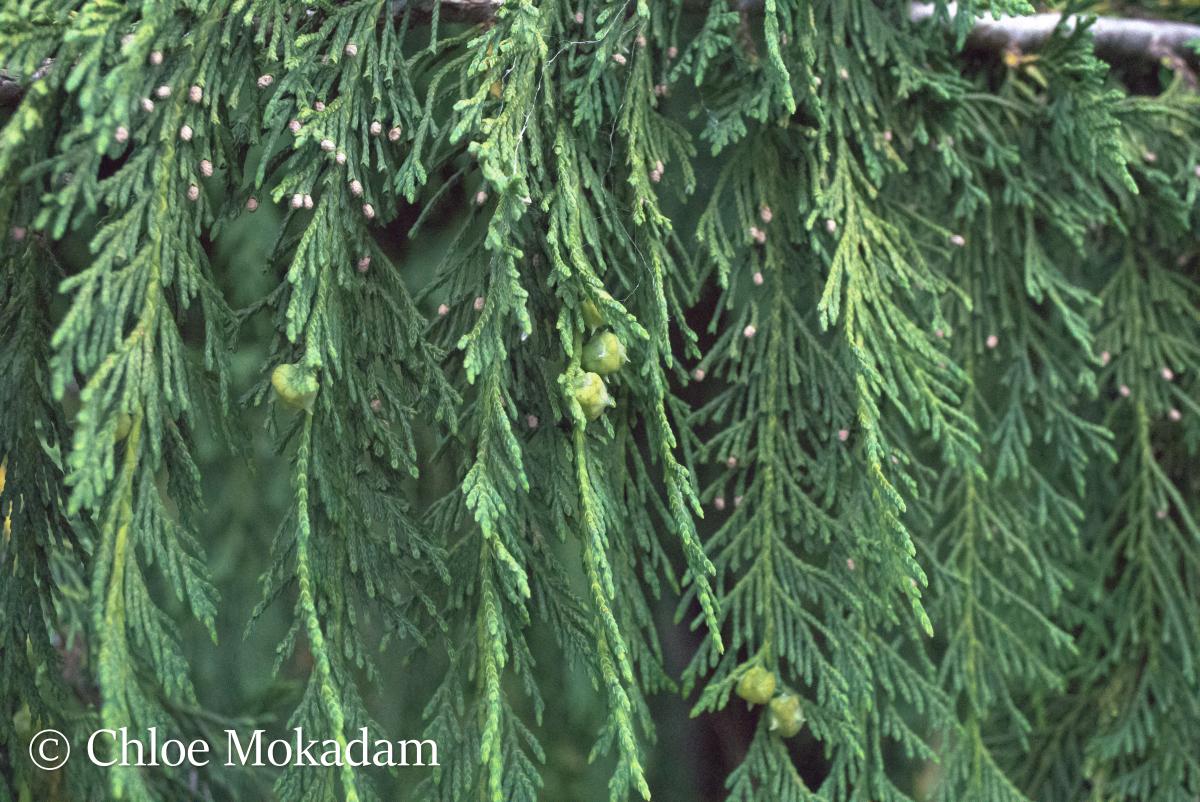
An Alaska yellow-cedar located in front of Bulger Communication Center.


Scientific name: Chamaecyparis nootkatensis
Common name: Alaska Yellow-Cedar, Nootka Falsecypress
Native: Yes
Native range: Native to the west coast of the United States and Canada, from Alaska to California [1,2].
Distribution in North America: Click to view the USDA Plants Database page for C. nootkatensis.
USDA Zones: 4-8A [1]
Maximum age: Average lifespan is between 300-700 years, however these trees can survive as long as 1040 years [2].
Ecology: Deer sometimes browse the foliage [4]. In the spring, bears bite and scar the bark to feed on the sugary phloem [2,4].
Ethnobotany: It is planted as an ornamental in Europe and North America, and its tough, resistant lumber is valued by builders, boatmakers, and woodworkers alike [2,4]. Indigenous American groups use the tree as a source of fiber for cordage and clothing, a building material for boats, tools, and structures, and a medicine for dermatological maladies [3].