


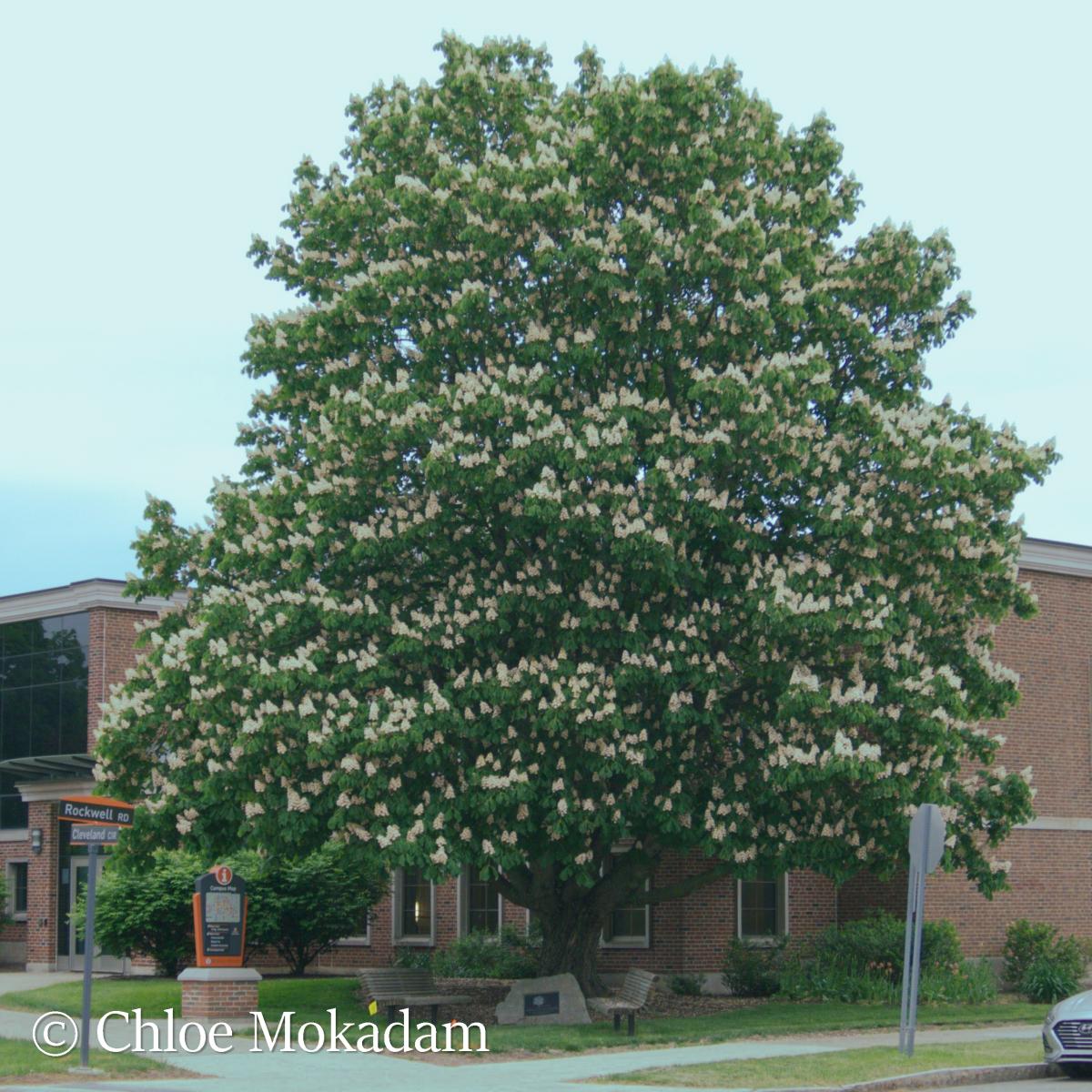
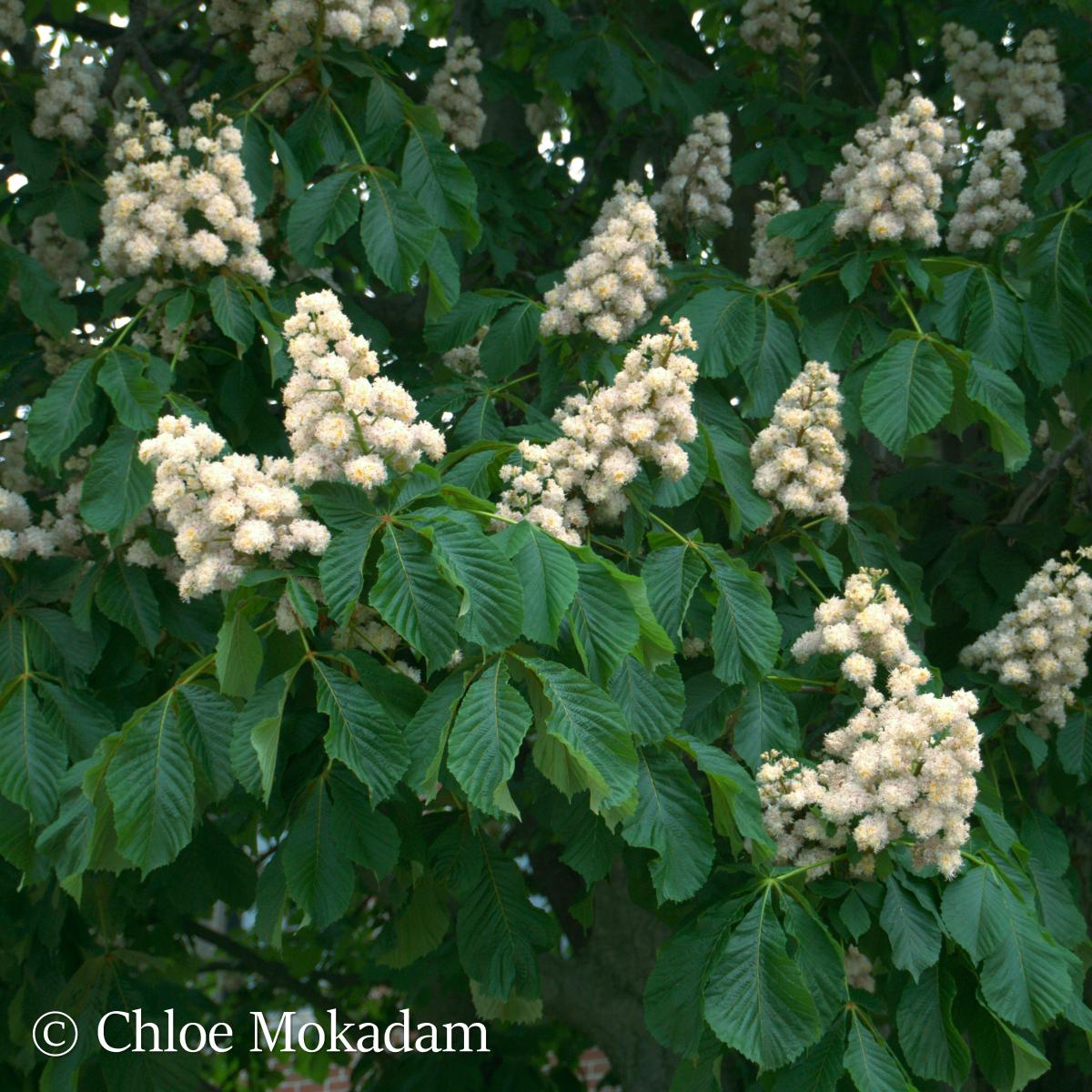
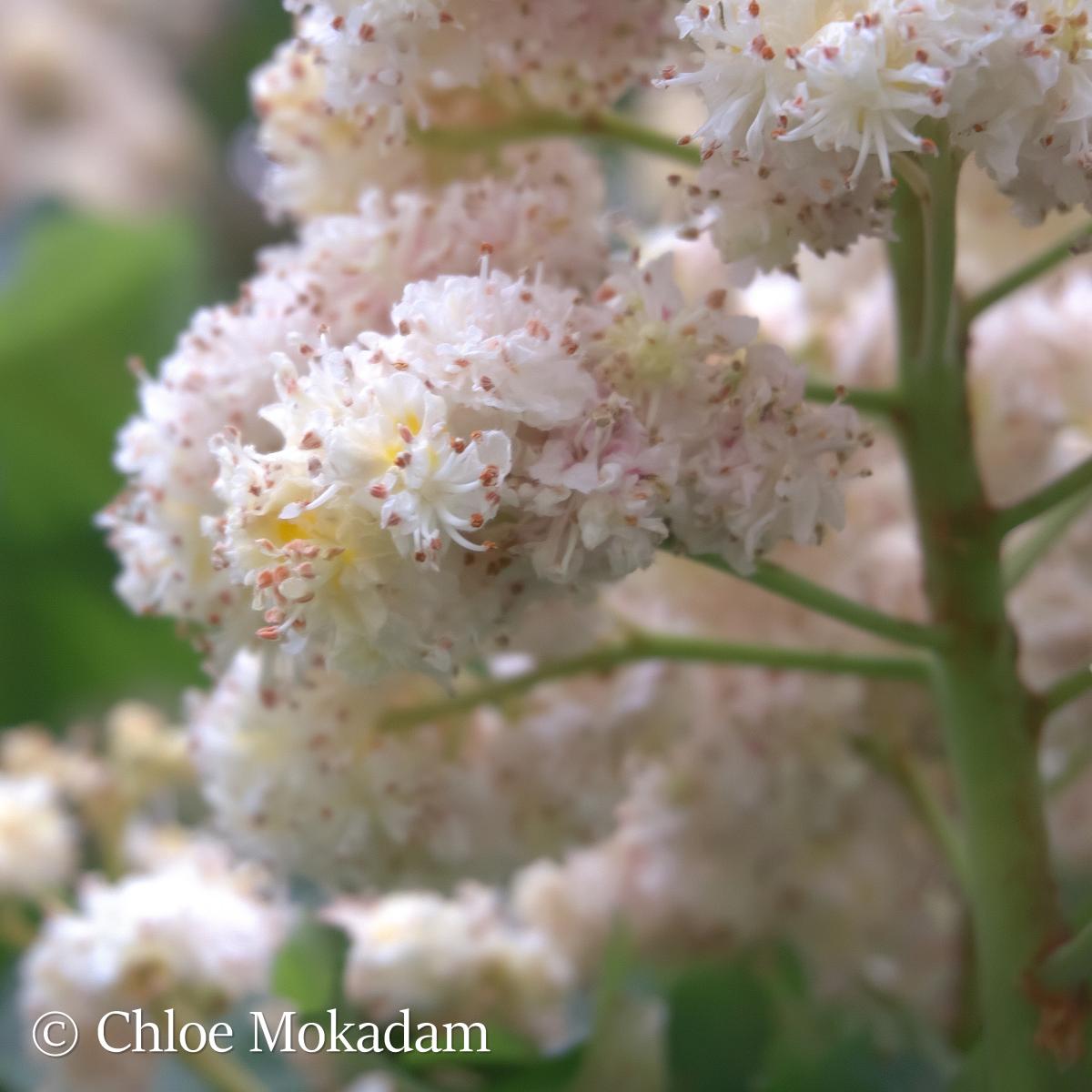
Scientific name: Aesculus hippocastanum
Common name: Common horsechestnut
Native: No
Native range: Native to the Balkans, but has been widely planted in Great Britain, northern Europe, the Middle East, Asia, and North America [1,2,6,7].
Distribution in North America: Click to view the USDA Plants Database page for A. hippocastanum.
USDA Zones: 4-7 [4]
Maximum age: Lives to an average of 300 years [1,5].
Ecology: Bees and other insects consume the nectar, while deers and squirrels forage the seeds [1,4,5].
Ethnobotany: It is primarily valued for its use in plantings, but is also a source of escin, a treatment for chronic venous inefficiency [2]. In its native range of the Balkans, it is used in folk medicine as a pain reliever and to improve circulation [2]. Indigenous American groups use the plant similarly; in particular, the Haudenosaunee use it as an analgesic and to treat lung issues [3].
[1] https://besjournals-onlinelibrary-wiley-com.
proxy.buffalostate.edu/doi/10.1111/1365-2745.13116
[2] https://www.researchgate.net/publication/
299404805_Aesculus_hippocastanum_in_Europe
_distribution_habitat_usage_and_threats
[3] http://naeb.brit.org/uses/search/
?string=Aesculus+hippocastanum
[4] https://www.arborday.org/trees/treeguide/
[5] https://ysjournal.com/wp-content/uploads/
2015/06/Horse-Chestnut-trees.pdf
[6] https://hort.ifas.ufl.edu/database/documents/
pdf/tree_fact_sheets/aeshipa.pdf
[7] https://www.invasiveplantatlas.org/subject.html?sub=3385