


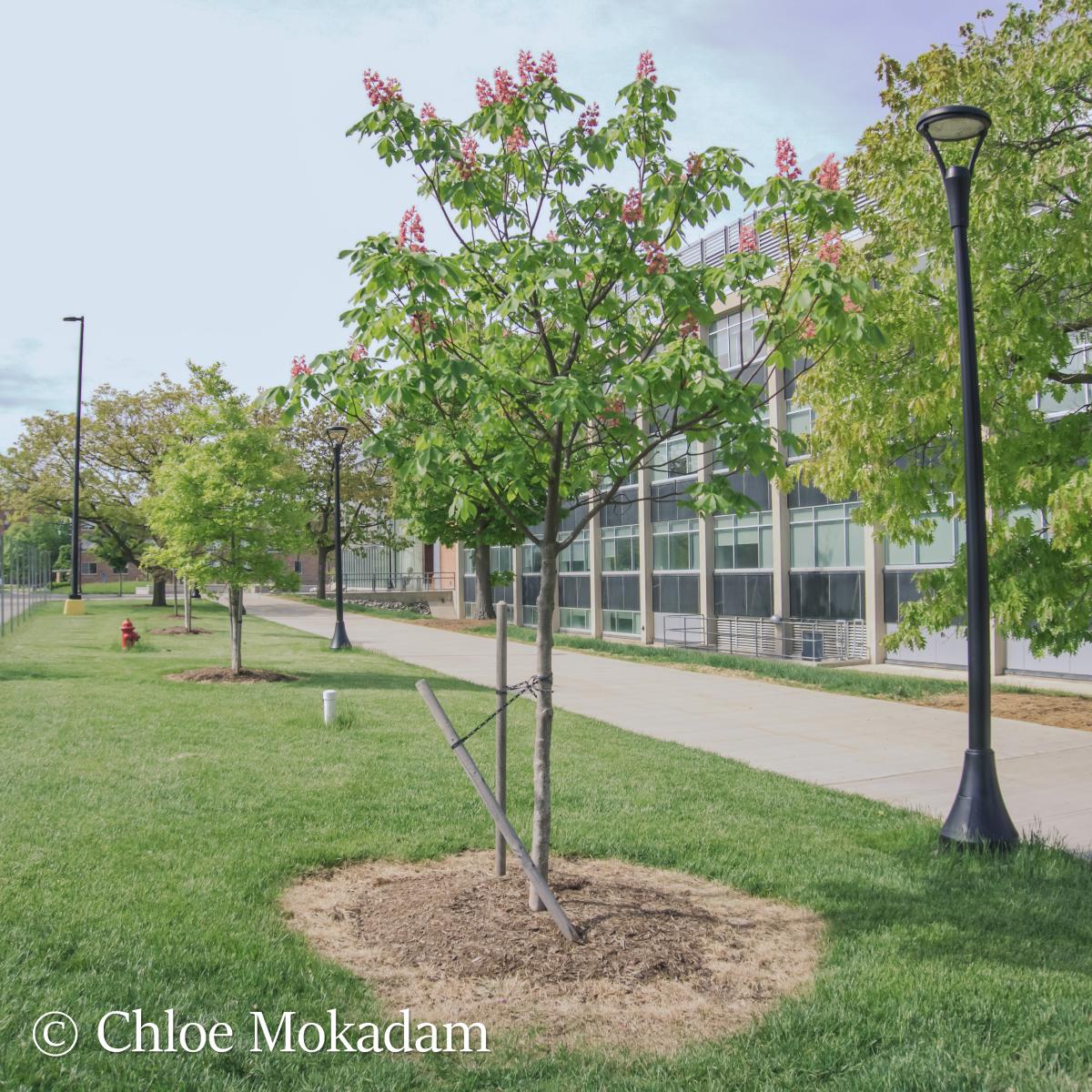
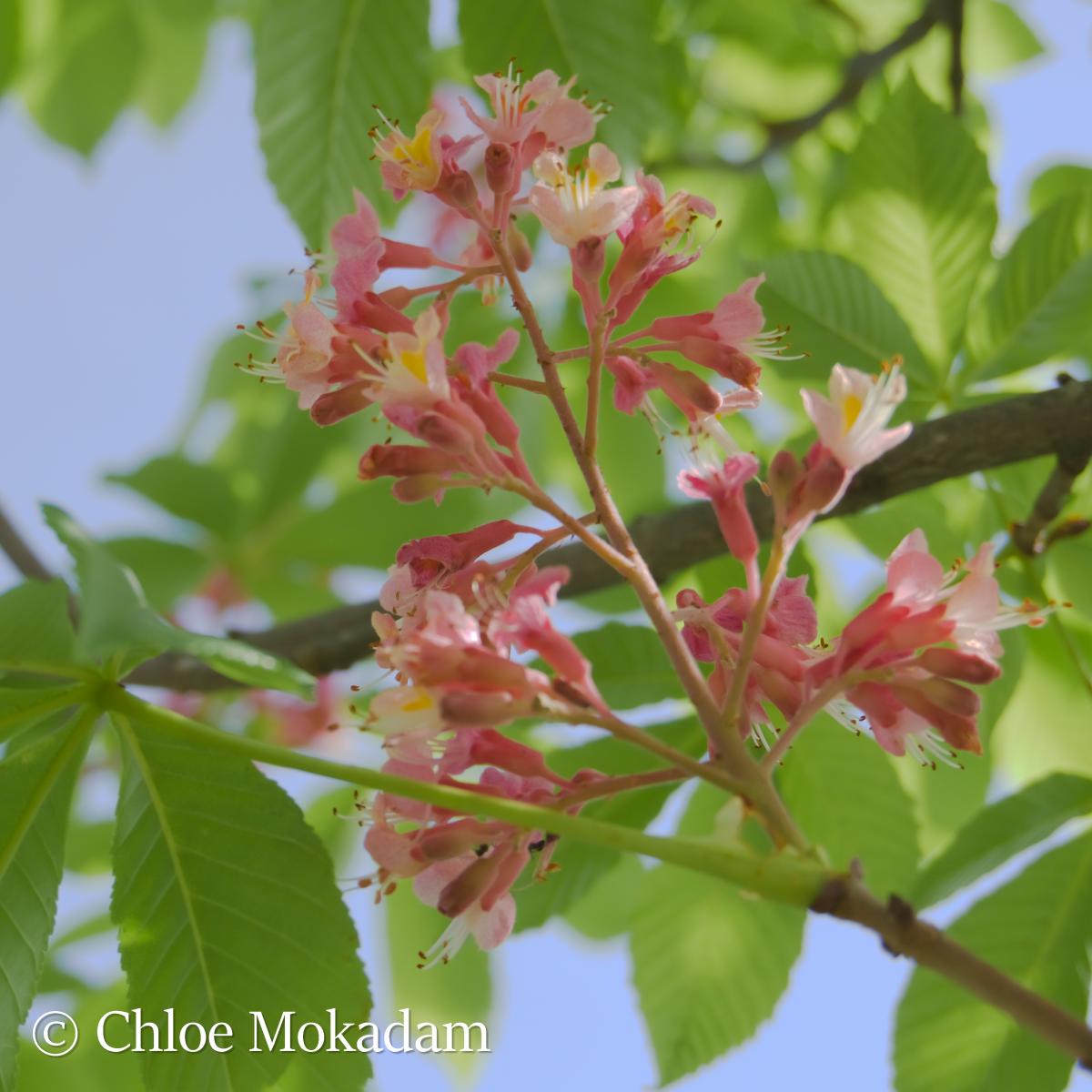
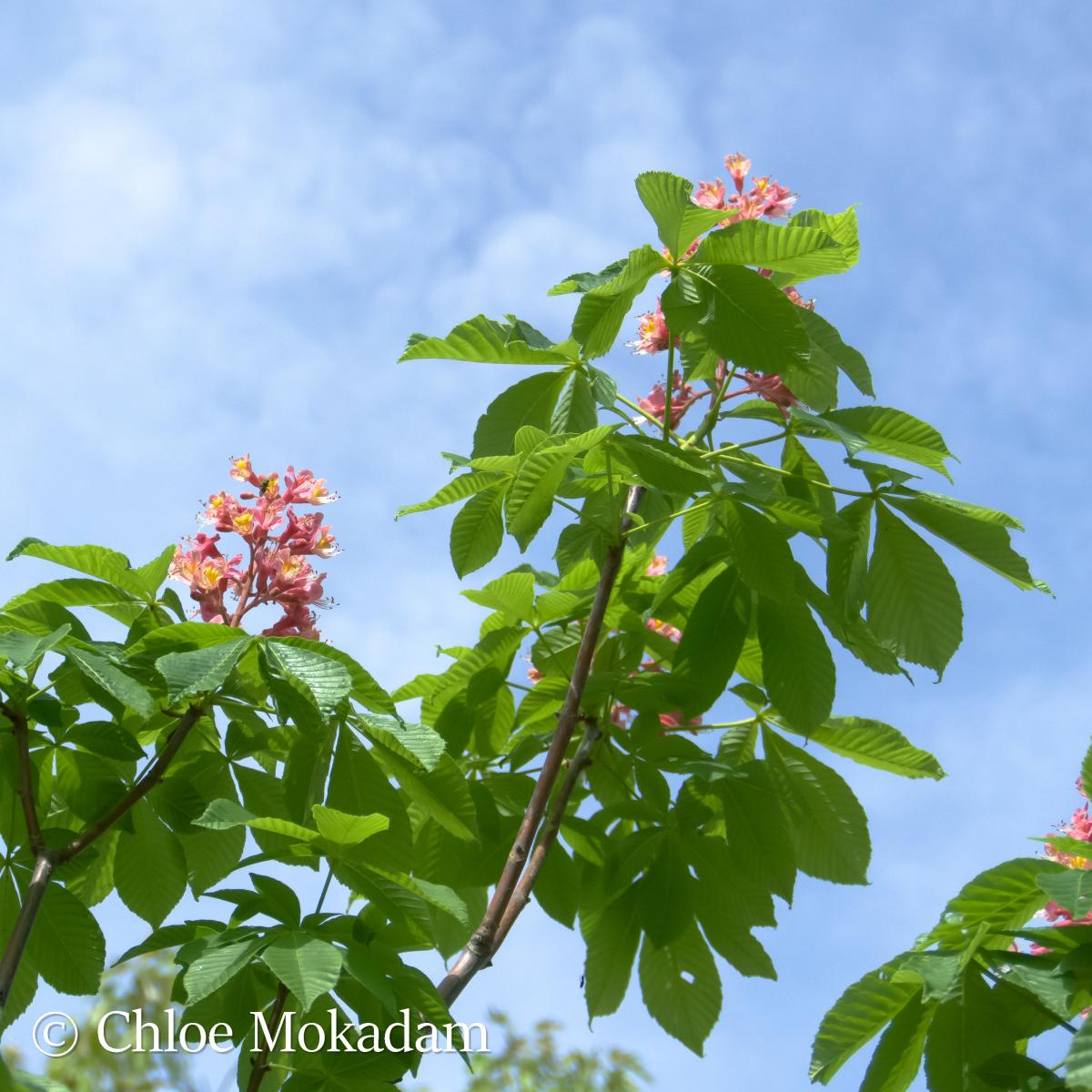
Scientific name: Aesculus x carnea
Common name: Red horsechestnut
Native: No
Native range: Red horse chestnut is a cultivated hybrid of A. hippocastanum (native to the Balkans) and A. pavia (native to North America) [1,4]. It has been planted in urban settings across the United States [1,2].
Distribution in North America: Click to view the USDA Plants Database page for A. x carnea.
USDA Zones: 5-7 [1]
Maximum age: The average lifespan of A. hippocastanum is listed as falling between 100-300 years [7,3]. Hence, it is likely that red horse chestnut is similarly long-lived.
Ecology: It is unclear how wildlife utilize red horse chestnut, but its parent species - A. hippocastanum and A. pavia - are utilized by bees, hummingbirds, deer, and squirrels [3,4,5].
Ethnobotany: The parent species - A. hippocastanum and A. pavia - are used for a variety of medicinal purposes in several European folk medicine traditions and Indigenous American traditions [3,5,6].
[1] http://hort.ufl.edu/trees/AESCARA.pdf
[2] https://mortonarb.org/plant-and-protect/
trees-and-plants/red-horse-chestnut/#overview
[3] https://ysjournal.com/wp-content/
uploads/2015/06/Horse-Chestnut-trees.pdf
[4] http://hort.ufl.edu/database/documents/pdf
[5] https://plants.ces.ncsu.edu/plants/aesculus-x-carnea/
[6] http://naeb.brit.org/uses/species/78/
[7] https://besjournals-onlinelibrary-wiley-com.proxy.buffalostate.edu/doi/10.1111/1365-2745.13116