


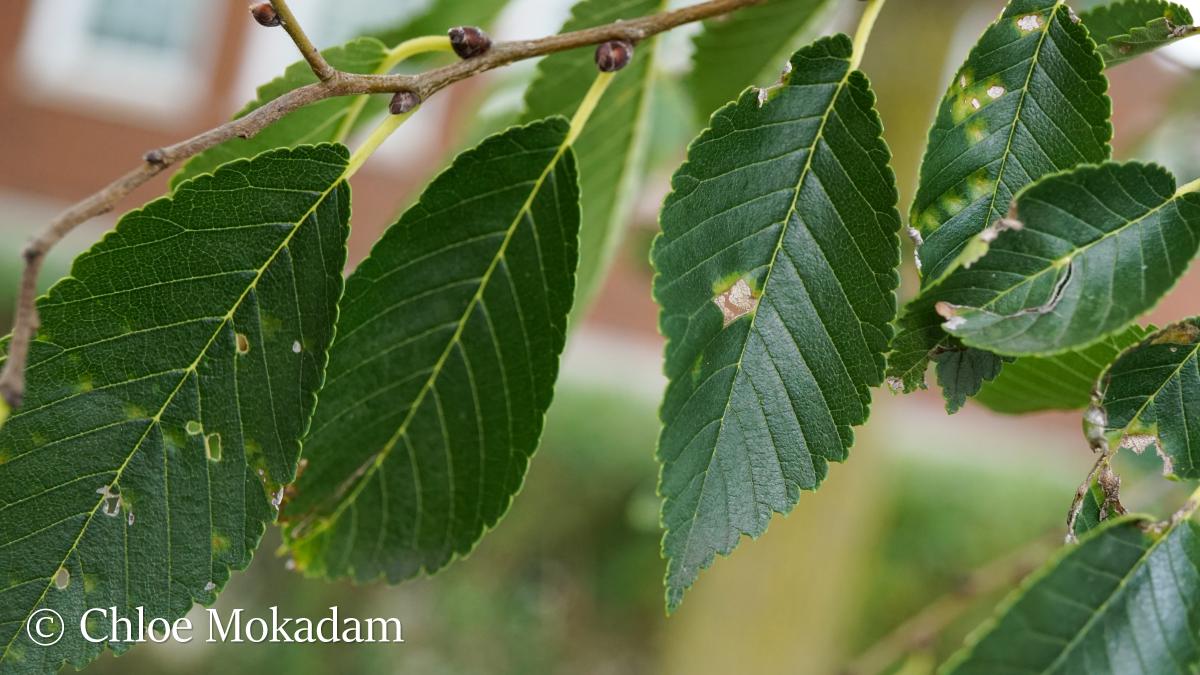
Scientific name: Ulmus americana
Common name: American Elm
Native: Yes
Native range: Widely spread throughout eastern North America [1,2,4], but its range has been decreased by the invasion of Dutch elm disease [4].
Distribution in North America: Click to view the USDA Plants Database page for U. americana.
USDA Zones: 2-9 [1]
Maximum age: May live as long as 300 years [2].
Ecology: The leaves are seeds are highly palatable to wildlife, including insects, small mammals, birds, and deer [1,2,4]. Native Ulmus spp. host hundreds of different insect species, and the decline of native elms due to Dutch elm disease may have caused a parallel decline in the butterfly and moth species that are hosted by elms [4].
Ethnobotany: The leaves have historically been used as livestock feed due to their high palatability [4], and the tree was a common feature of urban plantings prior to the invasion of Dutch elm disease [2]. Elms are a source of fiber, building material, food, and medicinal compounds for many Indigenous American groups, including the Haudenosaunee who use decoctions of the plant as a remedy for stomach troubles [3].