


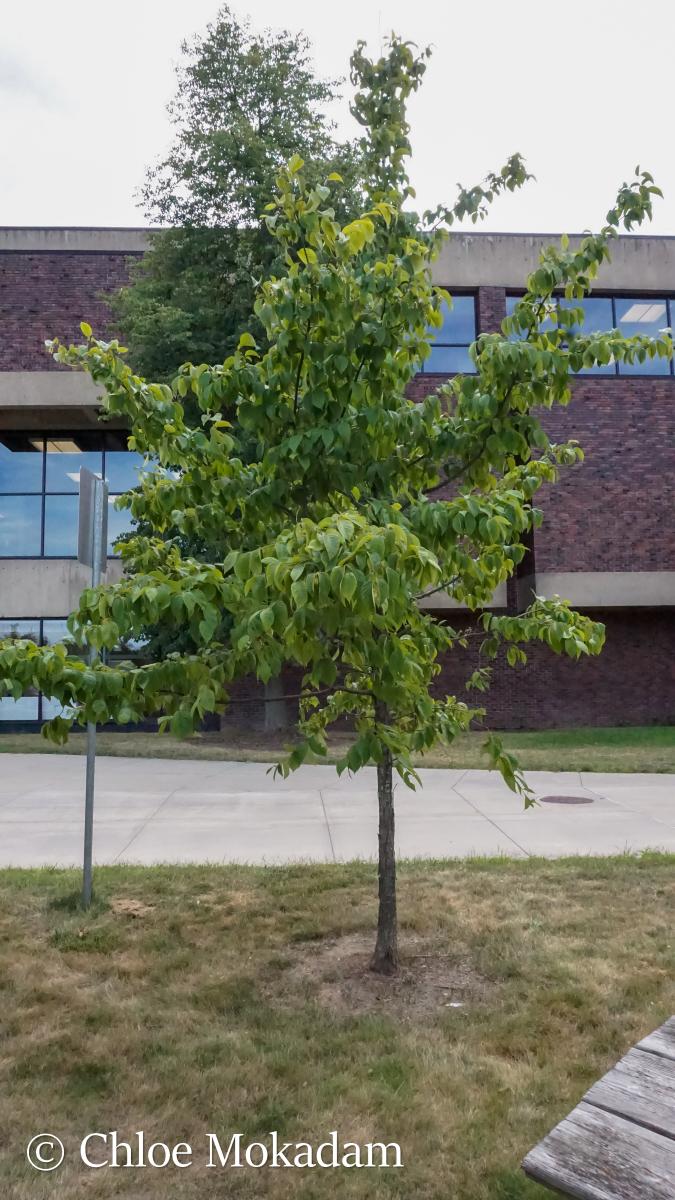
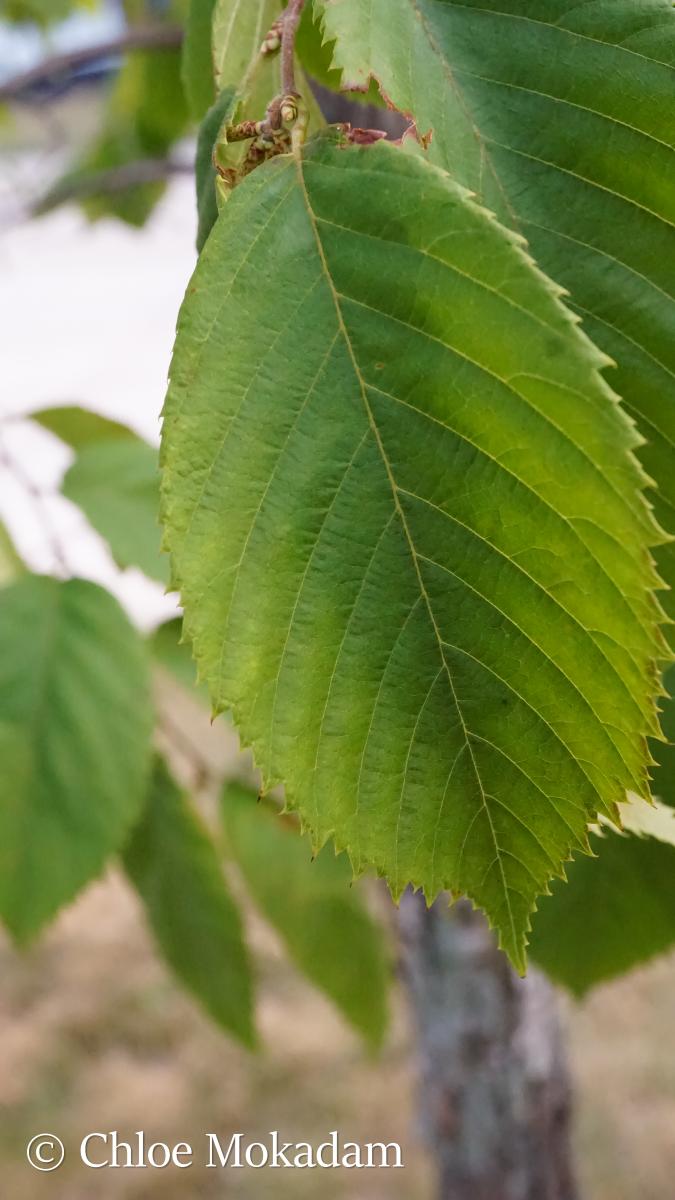
Scientific name: Ostrya virginiana
Common name: American or Eastern hophornbeam
Native: Yes
Native range: It range includes the eastern United States and extends as south as northern Mexico [1].
Distribution in North America: Click to view the USDA Plants Database page for O. virginiana.
USDA Zones: 5-9 [3]
Maximum age: It may live up to 280 years [4].
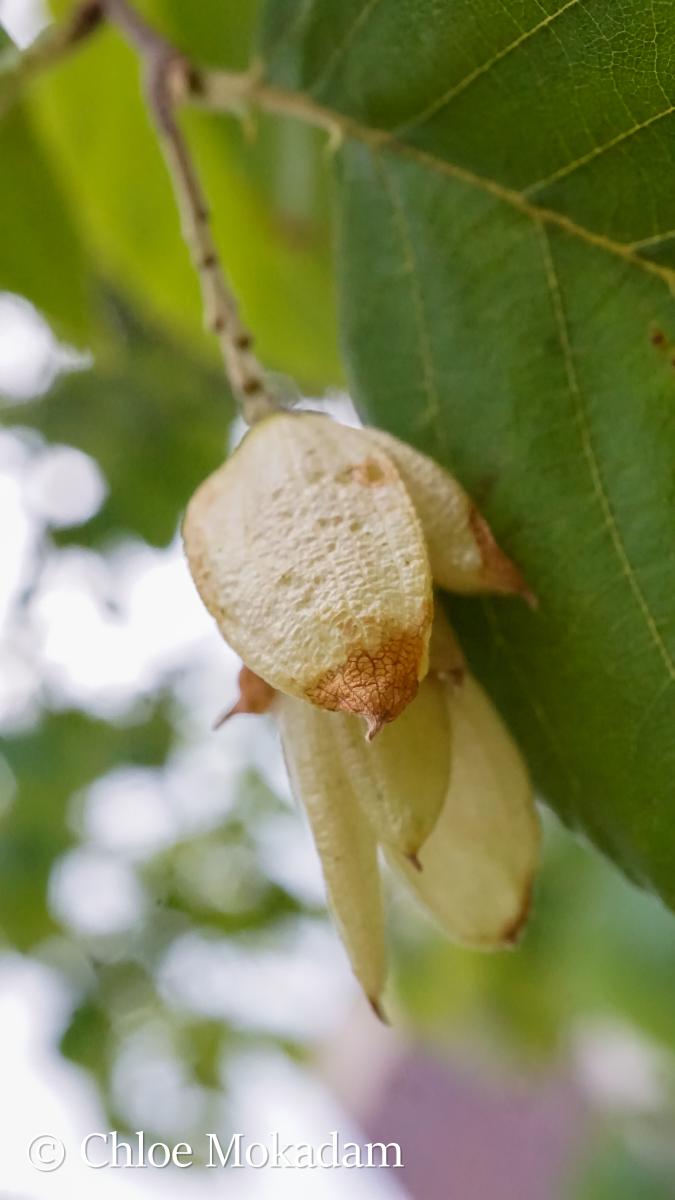
Ecology: Eastern hophornbeam nutlets enclosed in a papery, hop-like sheath are food for game birds, songbirds, and small mammals [3]. The catkins and buds are also consumed, and deer occasionally browse its foliage [1].
Ethnobotany: Various Indigenous American groups have used the tree for a variety of medical applications and as a building material [2]. It is valued as an ornamental, particularly for the unique appearance of its hop-like fruits [1,3].