


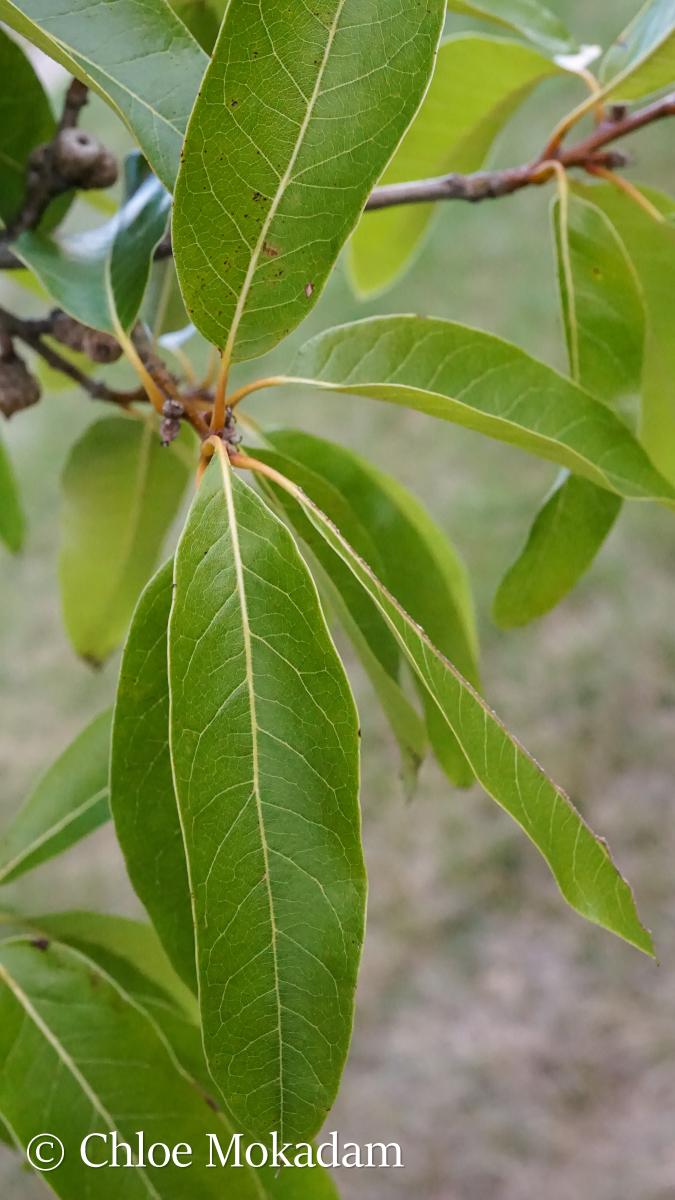

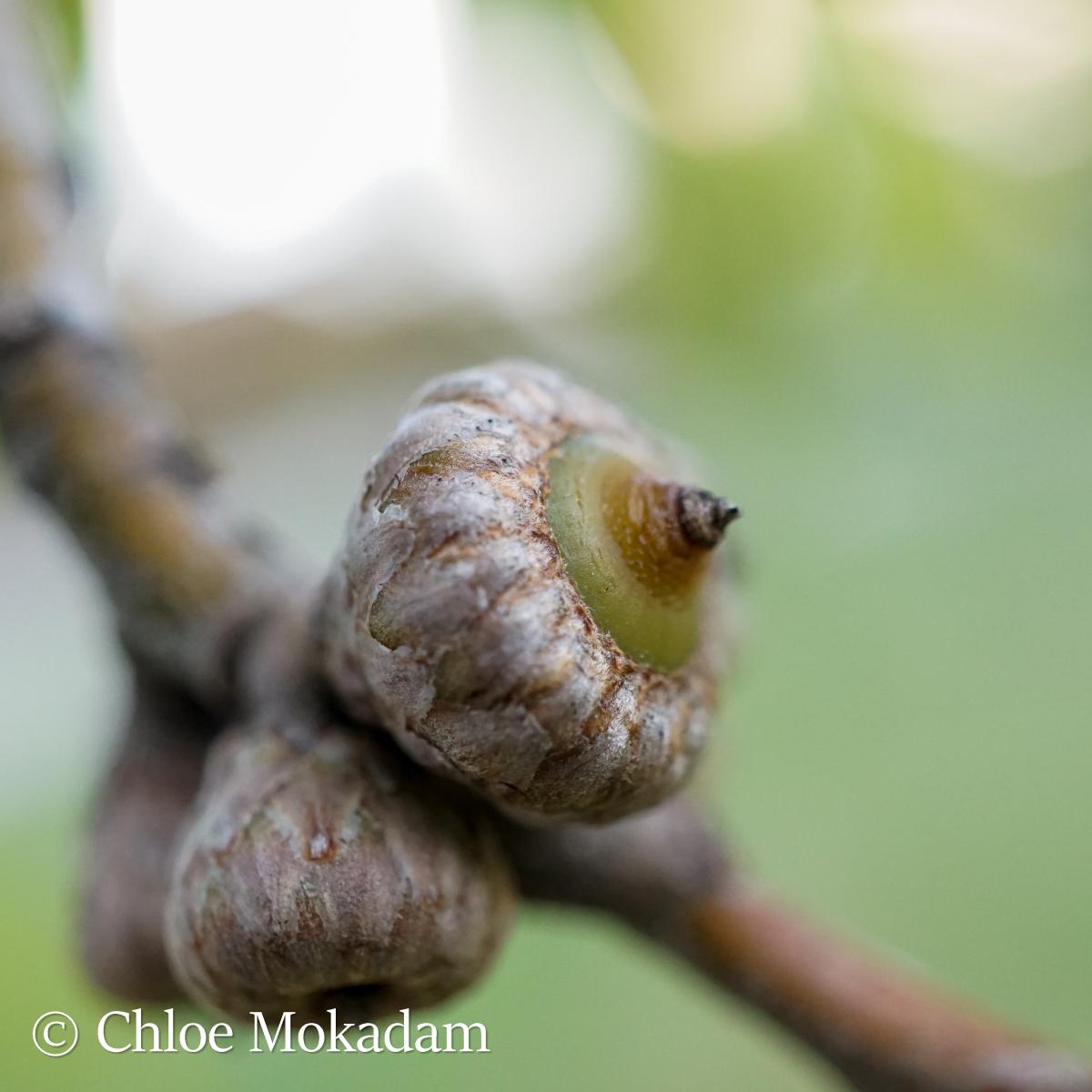
Scientific name: Quercus imbricaria
Common name: Shingle Oak
Native: Yes
Native range: Native to eastern and central North America [1,3].
Distribution in North America: Click to view the USDA Plants Database page for Q. imbricaria.
USDA Zones: 5-8A [1]
Maximum age: Lives to approximately 100 years [4].
Ecology: It is a host plant for the caterpillars of butterflies and moths, including the pink-striped oakworm moth (Anisota virginiensis), an aptly-named saturniid moth with a fuzzy, burnt ochre body and burgundy-magenta wings [7]. It also attracts a variety of other insects, in turn attracting insectivorous birds. The acorns provide food for birds and mammals [5].
Ethnobotany: The shingle oak is valued as a 'street tree' [1,3]. Indigenous American groups use the inner bark for medicine, the foliage and twigs for fiber, and the wood as a building material [2,6].
Eat the Planet: Oak Tree Acorns, A High Calorie Wild Edible
Eat the Weeds: Acorns - The Inside Story
In Defense of Plants: Red or White?
In Defense of Plants: Oaks - Insights into Evolution & Ecology
Native American Ethnobotany Database: Quercus imbricaria Michx.
[1] http://hort.ufl.edu/database/documents/
pdf/tree_fact_sheets/queimba.pdf
[2] http://naeb.brit.org/uses/species/3269/
[3] https://www.uky.edu/hort/Shingle-Oak
[4] https://extension.illinois.edu/sites/default/
files/maximum_tree_age_and_longevity.pdf
[5] https://plants.ces.ncsu.edu/plants/