


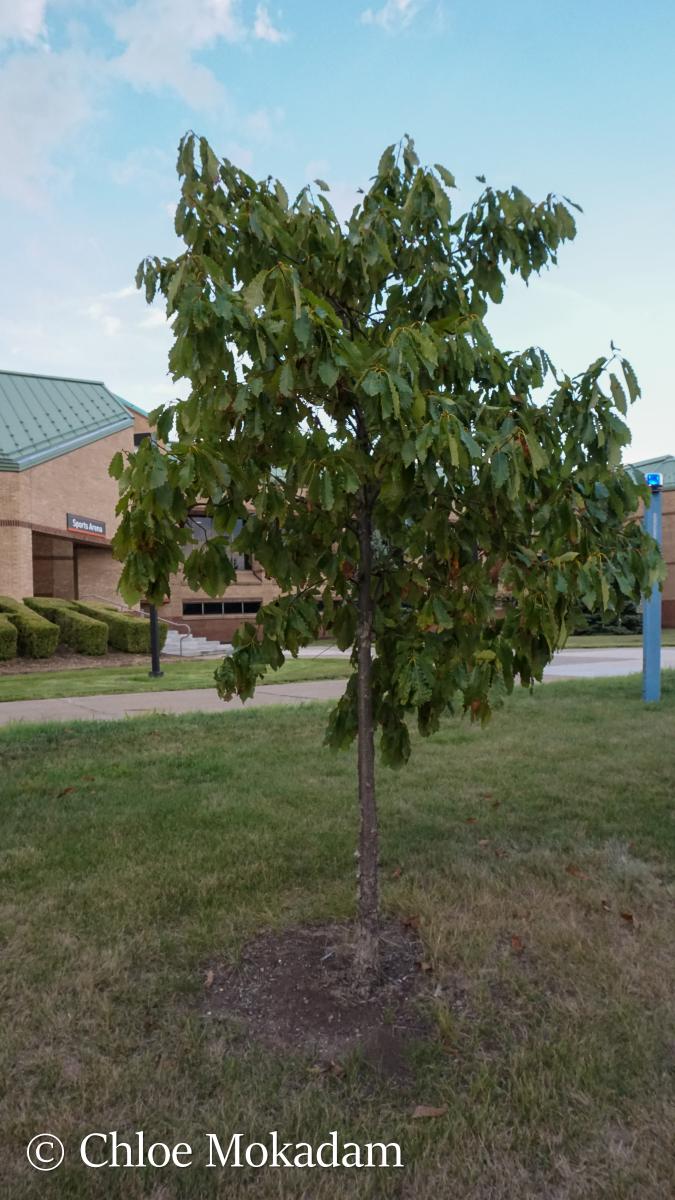

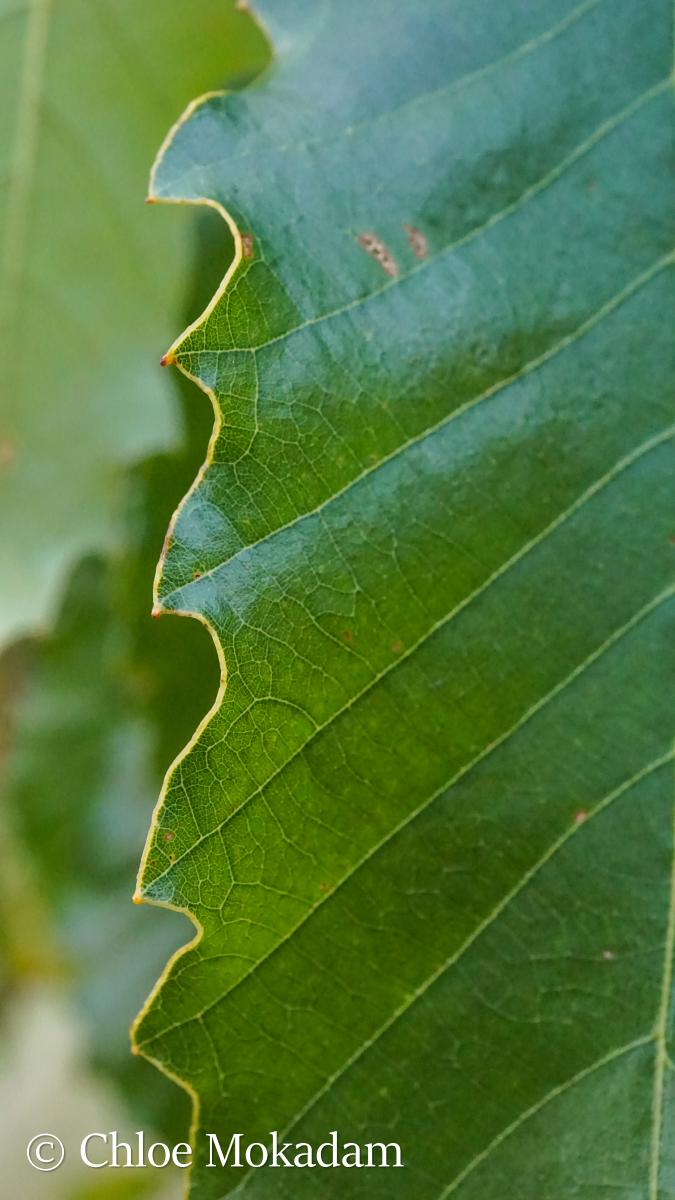
Scientific name: Quercus muehlenbergii
Common name: Chinkapin Oak
Native: Yes
Native range: Native to parts of the northeastern United States and much of the Midwest extending as far as central Texas. Small, isolated populations also exist in New Mexico and northeastern Mexico [2].
Distribution in North America: Click to view the USDA Plants Database page for Q. muehlenbergii.
USDA Zones: 3-9A [1]
Maximum age: Lives to approximately 250 years [4].
Ecology: It hosts a diversity of insects, including the caterpillars of both moths and butterflies, beetles, and gall-forming wasps [2]. Animals at every level of the forest food web - including squirrels, deer, ducks, and bears - forage the acorns [2,5]. Songbirds often perch in its branches [5].
Ethnobotany: It is used in construction, woodworking, and often used as fuelwood [2,5]. It is used as an anti-nausea medication by the Delaware people, and several Indigenous American groups use the acorn for food [3,5].
Eat the Planet: Oak Tree Acorns, A High Calorie Wild Edible
Eat the Weeds: Acorns - The Inside Story
In Defense of Plants: Red or White?
In Defense of Plants: Oaks - Insights into Evolution & Ecology
Chinquapin Oak by Mike Miller for The Community Word
Native American Ethnobotany Database: Quercus muehlenbergii Engelm.
US Forest Service: Chinkapin Oak