



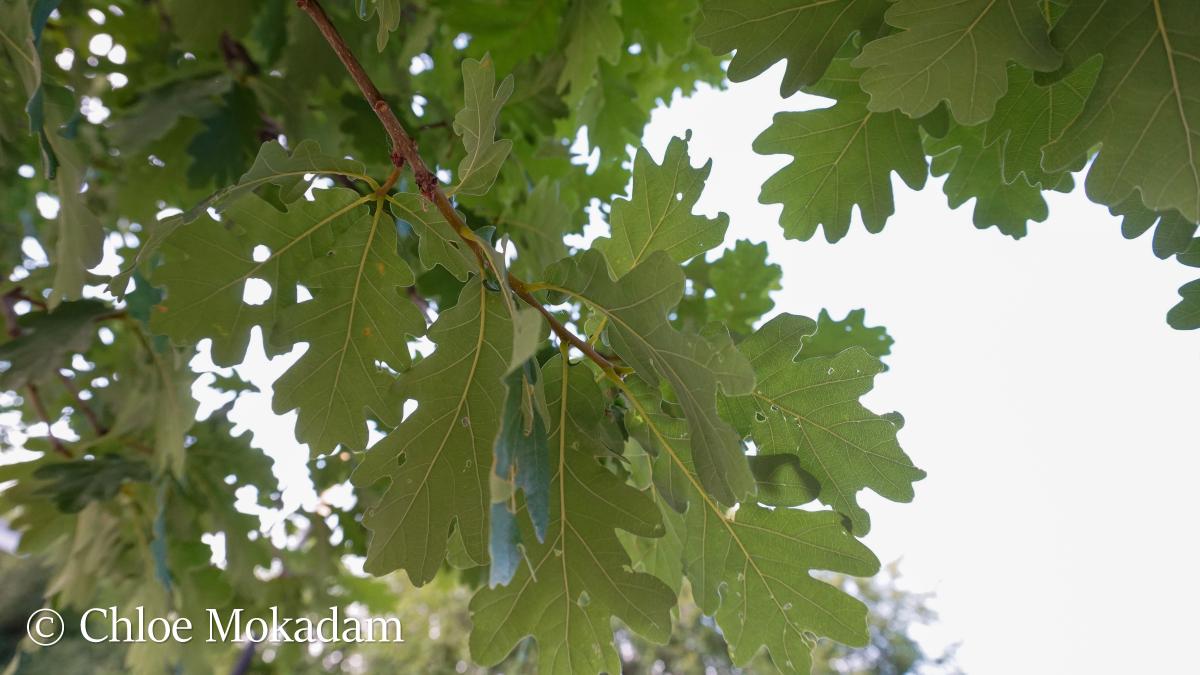

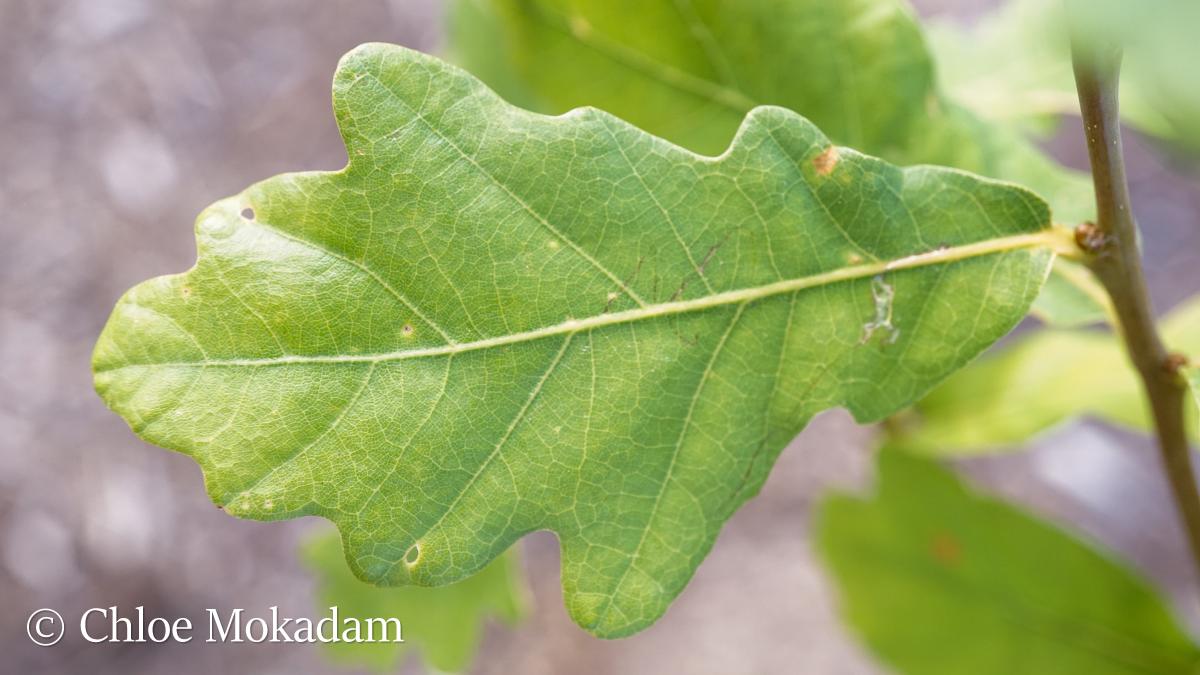
Scientific name: Quercus robur
Common name: English Oak
Native: No
Native range: It is native to Europe, North Africa, and western Asia [1,3,5], but is commonly cultivated in the eastern and northwestern parts of the United States, as well as adjacent areas of Canada [4].
Distribution in North America: Click to view the USDA Plants Database page for Q. robur.
USDA Zones: 5-8 [1]
Maximum age: English oak is notoriously long-lived, and may survive for up to 1,000 years [2,6].
Ecology: In its native range, it supports a diversity of insects, including butterflies, moths, and gall wasps - it is unclear if this holds true where it has been introduced or planted in North America [3]. However, its acorns are consumed by squirrels and other mammals [1,3].
Ethnobotany: Due to its long lifespan and majestic stature, it is an important tree in British mythology and ceremony, featuring in marriage ceremonies and Christmas celebrations [3]. Outside of its native range, it is primarily valued as an ornamental tree [1,4,6].
[1] http://hort.ufl.edu/database/documents/
pdf/tree_fact_sheets/queroba.pdf
[2] https://www-nature-com.proxy.buffalostate.edu/
[3] http://powo.science.kew.org/taxon/
urn:lsid:ipni.org:names:304293-2
[4] http://www.efloras.org/florataxon.aspx?
[5] https://www.invasiveplantatlas.org/
[6] https://trees.stanford.edu/ENCYC/QUErob.htm